Wednesday, May 27, 2015

The Importance of Tempo During Resistance Training

Tempo in the Gym


As I become a more comfortable personal trainer (I am very new), I see myself walking into every gym I can find and asking for a tour. The person giving me the tour will probably think I am interested in the new state of the art equipment, or maybe the spa area, or possibly the new tanning booth. As her words drown out, all I will be paying attention to is how people are lifting in the gym. I haven’t been in a ton of gyms yet, but I already know what I am going to see. And it never ceases to amaze me.

Very few people know the importance of lifting tempo, and just about everyone is doing it wrong


Lifting tempo is probably the least respected aspect of lifting. A lot of people lift fast and with little control. I can hear it in their mind, “If I can just lift this as fast as possible, I will be athletic and quick.” Well they may be right to some degree (and don’t get me wrong, lifting fast has its place). But when someone is lifting fast and with the most atrocious form, I have to say something.

When Lifting Too Fast Becomes Counterproductive

To achieve some metabolic conditioning during resistance training, you want a faster tempo than a slower tempo (that being said, you can create some serious burn from slow tempo exercises). Where this goes wrong is when people let the momentum from the positive carry them past the point of control during the negative. So, that is to say that when someone pulls the weight, let’s say during a lat pull down, and then basically lets the weight fall with only enough control to keep a handle on the bar, they are essentially letting momentum do all the work. This works out the muscle less and puts more strain on the joints. We don't want that. The entire idea of lifting is improve muscle endurance, muscle size/strength, and joint stability. By not controlling the weight in every aspect of the lift, we fail to achieve all three of those goals.

When Lifting Fast is Productive

Lifting fast is productive when the eccentric (think of the lowering of a dumbbell during a bicep curl) is not being influenced heavily by momentum, and the lift is under control. An example of this would be an explosive movement with a short duration, like a sprint, box jump, or broad jump. These exercises are strictly for producing force production and power, and are not generally influenced by external weight. In fact, most explosive exercises should have little to no eccentric force being applied. A good box jump is one where the person jumps, holds, and slowly steps down. In this example, not only will this save your knees, but it focuses on the primary movement, allowing for more precise exercise quality.

How Do I Know What Exercises I Should Do Fast?


At the end of the day, just about any exercise can be done fast. There is nothing wrong with having a fast tempo. But if you look like you are bro-fisting with a 20lb dumbbell in your hand, you really aren’t achieving anything. A good rule of thumb when lifting fast is the tempo speed 1-X-X. 1-X-X basically means be slow enough to control the weight back down, no break or pause, and be explosive on the pull or push. An example of this would be during a single arm dumbbell row. You pull the weight as fast as you can, no pause, then lower the weight with control for one second, and repeat. This insures that you are being explosive without compromising your joint stability. Keeping this in mind while lifting will dramatically improve your experience in the gym and decrease the likelihood of injury.

Sunday, May 17, 2015

Getting Unstuck

Recently, I have been paying close attention to psychology and how it pertains not only to health, but every day life. On a drive the other day, I listened to a lecture by a man by the name of Les Brown. Below I have linked sections of his talk I think are the best take aways, but I would definitely listen to the whole lecture if you have the time.


Life is Cyclical 

  • What happens to us will pass. Every up is followed by a down. Nothing lasts forever. It is important to remember this, at least to me, because I often fall into the spell of thinking the terrible will always be terrible. This helps remind me that good and bad come and go, and they usually cycle one after another. This to me is a key principle in life.


Don't Be Afraid to Make Mistakes

  • You aren't always going to make the best decisions. And that is okay. No man or woman ever did the best thing every time. Some times life throws you into situations where the best you can do is good enough. These are not failures. Even if you think it is a failure, it is really a chance to grow. The reason we think of failure as such a bad thing comes from a societal influence that failing means you are less than who you really are. Failing makes you better. Aim to succeed even, learn from your failures, move, and grow.


Forgive, and Grow

  • The person who lets the past stay in the past makes more room for improvement. A glass can not be full again until some has emptied. Do this with your life, your mind, your anger, depression. Stay in the moment, flow with life, and drop what happens to you. Let your ego have slippery hands. Don't hang on to things, let them go. Trust your gut, trust your intuition, trust your life.

Work on Yourself

  • The greatest investment is yourself. When you improve, everything around you, everything you do improves too. Get stronger where you are weak. You must sacrifice what you are today for what you will be tomorrow. Challenge yourself. Disregard those around you who are unsupportive. Find your path and go down it no matter what.

Have a Support System

  • The essence of life is relationship. Everything relates to each other in some way or another. One does not exist unless there is something to declare it exists, and in that we are all related. Understand that those around you influence you consciously and subconsciously. When positivity is communal, everyone benefits and vise versa. Have mentors you trust, have people around you who can give intelligent perspective. Bounce ideas off one another. There is power in community. Use it as a tool to grow yourself.


Sunday, March 15, 2015

Trusting Yourself: Making Decisions, Depression, and Connecting With Yourself

It really is just as simple as trusting yourself, making choices in life that is. Of course, this is coming from someone who still doesn't trust himself fully. But even though I don't trust myself fully, meaning I don't always go with my gut, my gut knows in the end what was right, and in turn I feel the effects either way. I'll give you a scenario.

I was at the golf course last weekend. That day as a whole I was feeling off. I hadn't been out of the house in a while (I guess I felt out of wack socially). The starter at the course told us to pair up with the group in front of us. Me being out of sorts, I felt uncomfortable about doing this. Mostly because my golf game was so poor that playing with someone I didn't know meant potentially slowing down the game, and in turn feeling embarrassed about my poor play. So what did I do? I did what I have always done. I ignored the situation, hoping it would go away. I didn't introduce myself to the group ahead, hoping it would mean we wouldn't have to play with them. It ended up making the situation even worse. The starter, in the absence of my action, told the players ahead of us that they were going to pair up with us. This made me feel even more like an idiot, as it should have. The feeling I got in my gut at that moment was pure disgust for myself. I hadn't felt that way in a long time. But why did I feel this way? Was it because I was embarrassed? Maybe. I think it goes deeper than that. I think it is because what I chose to do went completely against my true nature, the one that hides behind fear and anxiety. The true me, the person that is in the shadow of the mask I created so many years ago. And one I am slowly learning to break out of. So that feeling you get when you are depressed, it is very similar to the scenario I described above. Depression, I believe at it's true essence, is a severe disconnect with your true self. So how do we reestablish that connection with ourselves? I'll share a few example from my own life.

It is going to sound like I am over simplifying this because there is no magic formula for connecting with yourself. Connecting with yourself is more about stripping away what is hiding your true nature than it is about finding your true nature. See, in my eyes, who you really are comes out when you aren't stressed, when you aren't anxious, or when you aren't in fear. Think back to a time when you were really happy. It could be when you were in love, or when you nailed an interview, your last birthday, or a time you spent with family. That feeling is essentially you connecting with your true self. It is you being you without having to hinder any part of your personality, thoughts, or emotions. Now think back to a time when you were last depressed. If you can process it comfortably, and by that I mean without it causing you too much stress (though that in  and of itself is probably telling enough)-- think about that time. It is likely obvious that you were sad, depressed, alone, disconnected. Now think about that situation and think about what causes you to feel that way. I'll run a quick situation by you that might help you relate this to your own life.

I tend to think irrationally a lot. Probably 75% of my negative thoughts stem from some type of irrational scenario. Long story short, there was a time in my life where this was used to process fears I had because I didn't feel comfortable expressing them externally. So to this day, I will have an irrational thought about an interview, or a social encounter, or some social situation where I don't feel confident. Every time that irrational fear pops up, I have extreme anxiety that causes me to want to vomit. I go through the situation anyway, and what do you know. It wasn't that bad. But what I have realized is this: it is not that I do not have the ability to do the thing I am fearful of, it is that I am creating an unlikely scenario in my head before it even happens based on absolutely no facts, and letting it steer my life. That is me being depressed, that is me being disconnected from myself. The take away from all that? If you are depressed, explore why. I can be pretty sure it has something to do you not following your gut, or acting in a way that is not congruent with your true identity.

At this point I feel like I've dove pretty deep into this subject and I want to pull back a bit and give you a break from evaluating your own life (if that is how you are approaching this article). During this time, I am going to share how I reconnect with myself. Some of it might seem weird to you, unorthodox, probably a little comfortable. That's pretty normal. I felt the same way. But it really isn't that weird once you do it a couple times. I call it meditation, but it probably isn't the kind you are thinking of.

When I am depressed, I meditate. I sit down in my room on the floor and close my eyes. At first I just breath. I need to calm down from whatever it is that is bothering me. Then I just think. I let ideas, thoughts, feeling just flow through me without giving too much attention to any specific one for too long. Then I start talking to myself about what it is that is bothering me. I then get into a sort of dialog where I am playing two people. One person is asking me questions and the other person is answering them. They are both me. One is being the listener and one is being the speaker. From this technique I achieve two main things (though there are plenty more): 1) I am able to explore how I feel about any specific emotion, thought, or idea with questions. 2) I am able to voice my concerns without feeling shame about how I feel about them because I am talking to myself as appose to a therapist. After about half an hour of this, maybe less, I feel better. And all I really did was explore why I felt the way I felt, regardless of it being a positive or negative emotion. I just explored it. Pretty soon you will see a pattern. You will better understand why you are depressed, scared, have anxiety, or the like. And for me at least, every single time the cause of those negative feelings stemmed from being too far away from my true self. Think of it is as being too far away from a WiFi signal. If you are out of range, you won't be able to use that service any more. Same goes for being disconnected from yourself. If you are constantly distracted, you will grow further and further from your roots, so to speak.

Knowing yourself is about focusing on what you are rather than what you are missing. You have everything you need inside of you. The main problem is we are too distracted to hear the voice that is guiding us. It is more about peeling away layers and less about adding them, thinking you are some how incomplete from birth. When we explore our thoughts, they become less foreign to us. They become our friends instead of our enemies. The more we explore them, the less of a fearful hold they have on us. Instead of them being in control, we are in control.The more you attempt to connect to yourself, the more happy you will ultimately become.

Sunday, February 15, 2015

The Scared Society

I went out on a limb and titled this “The Scared Society,” not because I think the title really drives the point home, but because I think it leaves the discussion open to many different possible avenues. So, what am I really trying to get at here? What is our society so scared of? It’s not what you might think. It isn't terrorism. It isn't world hunger (although you can argue that the rate of obesity in America is some kind of premeditative method for preventing such a thing).  It isn't death or being financially unstable. It’s something much deeper than what floats around on the surface. It’s internal. Society is scared of being themselves. And I don’t just mean they are scared of walking around doing what comes natural, though that is a large part of it. They are scared of what that might mean to other people. They are scared what societal spot light might be shown on them for “going against the grain.” We see what happens to people who act out. Many times, on the highest level, they are bashed in the media. “So and so is crazy, look what he or she did tonight at 9.” No one wants to be that person, the person who is looked at with disapproving eyes. No one wants to be the person who got extremely aggravated and did something violent. No one wants to be chastised for being expressive. Ahhh ha! There it is. We found it. No one wants to be looked at “differently” for being expressive. That’s a good place to go next.

Your Authentic Self

I’ll give you a little story to help off load some of the burden of thinking this kind of stuff only happens to you. When I was very young, think 3 to 7, I was probably the most expressive kid anyone knew. I have proof. One Christmas at my uncle’s house, I got a gift I had wanted more than any other gift ever in the history of getting gifts. When I opened it, I was so excited I stood up on a coffee table and announced to the world (well, the living room of 15 people), every explainable detail of that gift. I was the most proud kid in the world. I was being authentic, I was being myself. There was another time when I set up a broadcasting table in my living room and ran through play after play on video tape of me and my brother catching the football. I had very little idea what I was talking about, but I loved it. And I did it because of loved it, and because that is who I am. Somewhere along the line I lost that. Something happened. My guess is, when I was that age, my expressiveness was too much for those around me to handle. So after while of being told to “be quiet” or being somehow blunted during my expressive moments, I learned that those around me could not handle who I was, authentically. And so over the years I regressed. I stopped being myself, because who I was could not be handled, and it in fact stressed people out. To a child, being themselves and being “liked” or, put more beautifully, having an emotional connection to a parent or guardian, is vastly more important to their safety than being authentic. This is very common with children these days, and I believe we are seeing more of it than we ever have.

How Did I Lose My Authenticity?

So what does a kid learn when he or she's authentic self is stunted in childhood? Well, my experience is, they learn that what comes natural is to be tamed. They learn self-control. They learn that their thoughts must be wrestled with, that what comes natural must be analyzed, reviewed by a board of qualified brain parts, tested again by a double blind review team, and then eventually published. Only the final form looks nothing like the original draft. If you were to compare the two, you’d notice a dramatic decrease in personality of the piece. Then you could take that final draft and look at a few different final drafts. You would likely find similarities, shared ideas. You might even ask if it was plagiarized, or if those two people worked on that idea together. And soon, what you really see is uniformity. You see the same thing mass produced, because that is how we do things now. We like everything to be the same. And from that we are told we have similarities, that we fit in, and fitting in is associated with social status and being “normal.” What is sad about that is, we have people who are depressed and unaware why. Something happens to them and they break down. They feel lost, unsupported, confused. So they turn to distractions because they don’t know what is causing this problem, and they are exhausted by trying to understand it. But what is really going on here, if you can take a moment to step outside your own version of this (believe me, I was getting lost in recalling moments of my life in relation to this as well)? What is really going on, what chronic depression really is, is a state of being disconnected from your true self. It is ignoring that little voice inside you that says “This isn't the career you really want to be in,” or “You can’t keep doing this just for the money,” and “You don’t really agree with that point of view, why did you say that?” Over the years, we have been told not to trust the voices in our heads, that they are some psychotic tumor or disease. And because of this, many of us get scared of what we think. We think there is something wrong with us, that we are crazy. But in fact that very voice, or collection of voices, is the guiding light to our true selves. They are the only thing we really have. It is our gut, it is the authentic self we have been told to suppress for so many years.

 How Do I Listen to My Gut?

I have a feeling some people are going to ask that, and so I think it is a good idea to talk about that here. This is a very good question even though it might seem like it has a simple answer. The answer is simple, but to listen to your gut, you have to shut out all the other noise. If you want to listen to your gut, do this. Go about your day. When something comes to you in a flash, do it. For example, I was at the grocery store the other day, and a lady at the register had a highlighted streak in her hair. My initial reaction was to compliment her on how it looked. Not because I wanted to hit on her, but because what I immediately thought was, “hey, that looks good on her.” What I did next was become neurotic. I started thinking too much, “Will she take it the wrong way?” “What if I sound creepy?” “What if her boyfriend is the guy bagging the groceries?” By the time I got to my turn in line, I had talked myself out of a simple compliment, all because I didn't just listen to my gut. Instead, I became worried because I over thought the whole thing. Following our gut is going with instinct. Everything else is neurosis.

Take the Risk

Now, oh how fun it is to start off a sentence with that word—you are probably thinking, “Well, great. So now I have to quit my job because I hate it and I rather be a painter. How will  I survive with no consistent income?" Quitting your job is no easy task. I've been let go, and I've quit one other job until I found the balls to just say, “Screw it, I don’t care about the consequences, I can’t stand being this depressed anymore.” It took a good 5 years for me to wake up, so don’t feel rushed. But, if you feel like you are simply spinning wheels, think about making a change. In the time I've quit my job, I've created more opportunities for myself than I ever thought I would. If you don’t know me, I can be extremely shy. I get anxiety attacks from introducing myself to people, saying goodbye at parties, and talking to people in group settings. So for me to simply talk myself out of that and contact 15 different gyms, 10 different businesses, and pursue leads that had potential, it was like I was a completely different person. But how? Two things, being depressed felt much worse than being a little nervous before a phone call or social interaction. Second, my passion for fitness, nutrition, and health as a whole destroyed my preconceived fears of the unknown. The unknown, as I have realized, is conquered by doing, not thinking. So I just did, and it made all the difference.

What to Walk Away With

I know I've touched on a series of ideas and likely some very personal feelings and emotions. But what can you take away from this that might help you get this gist of my point
  • Be authentic. Do what comes to you. If you think something in an instant, that is probably your gut, and it is a good idea to follow it. Enjoy where it takes you.
  • Thinking can be your worst enemy. Learn to reduce your thinking by following your gut. Thinking is created from preconceived notions that we inherently make bad choices. While this may be true for some of us, it is better to learn this way than to create neurotic thinking and suffer from being disconnected from our true selves.
  • Many of the reasons we are depressed come from a loss of connection from ourselves. We gain that back by listening to our inner voice. We have a clearer inner voice by reducing the amount of distractions in our lives.
  • Do what you love. Money is very much a real necessity in life. But money can be made doing anything, so do not get stuck thinking you have to work a job you don’t like just to survive. If you pursue a career that is aligned with your passion, that passion will shine through and you will be considered more heavily for a job you love than a job you don’t love.
  • Express yourself. Be it through any medium (writing, blogging, vlogging, painting, drawing, exercise, etc.). Your expression is a gift to the world regardless of how the world views it. Embrace your passions and the passion will come back to you.


Sunday, February 8, 2015

If Counting Calories Isn't For You But You Still Want Results

I can't argue much with science because I don't have any proof counting calories doesn't work-- but then again, that isn't what I am arguing. I've counted calories myself. And it has worked. It also made me a food Nazi, and not in a good way.

When I first started counting calories 9 years ago, I thought it was the best. I knew exactly what I was eating every day. I felt in control of my eating habits. I knew I was going to lose weight, I could prove it!

Then came the psychosis. One day I had 20 calories left to eat to be in a 200 calorie deficit. "Just leave it alone," I told myself. "The more of a deficit you create, the faster you will lose weight." But it didn't end there. Soon it was 50 calories under, then 100, then 200. I was slowly drifting into a "if less is good (in this case), even less it better." I stopped going out with friends. I spent my free time adding my food choices to an online database to keep track. I basically did nothing else with my life for that brief time. Then one day I just stopped. The pounds that I didn't even need to lose stopped looking like they were coming off. The reward no longer outweighed the seemingly impossible goal (six pack abs). And my life had become boring and unfulfilled. How did I get this far?

It's not uncommon, really. Especially if you have strong willpower. Many times people take counting calories too far. In fact, you could argue that counting calories to the last gram is a kind of neurosis. It's too micromanaged. It doesn't really work that way, health I mean. Not one of our ancestors ever sat and thought what a calorie even is. I'm sure they had sensations of overeating, or under eating. But I can't imagine that before bed they pondered if they got the low fat diary or the high fat, and if it was going to cause their calorie skews to go out of whack. That is usually where I like to bring people when I talk about this calories in, calories out business. But it doesn't always win the argument, cause they open up their phones or computers and show me the body of someone who counted calories and lost a ton of weight. At that point I don't even begin to argue counting calories won't work, because they are right. It does work. It does. If you want to go about it that way, which is a lot of work, you can. But for those of you who don't, there are some easier solutions, and it works in a baby step process.

Step 1: Track Your Meal Patterns for a Week

This doesn't have to be a crazy journal or anything. It could simply be a chart that has three squares for each day spread out through a week. All you need to do is describe what you ate. So if you had eggs, toast, bacon, and OJ for breakfast, you'd write that all in. Be honest with this. The point isn't to hide habits, foods you love, or anything you think might be judged. After all, you are the one who wants to make a change, and the person you are working with should be gentle with that. Not everyone can or should go cold turkey. After that week is done, give the list to the trainer or nutritionist you are working with. If you were working with me, the first thing I would do would be to ask you what your favorite foods are. Then I would ask you your typical weekly schedule (work hours, free time, bed time, etc). From there, I would set up a goal system with you that works with that you want, not necessarily what you "should" do. See, too many times trained professional will look at what a person eats and think, "oh, all you need to do here is eat more veggies, fruits, meats at dinner, cut back on the fast food, and you'll be fine." No way! Someone get the Noble Prize, this has never been thought of before! A strategy I think works is to look at the chart and count meals the client would say are junk food or not. I think it is important for the understanding to be there, and if you have her or him make that connection what they are eating, it doesn't just become a "here, fix me," type of mentality, it becomes a learning experience. This is ultimately the goal. So we have counted the number of junk food meals in a week. Typically if you are eating 3 meals a day, you will have 21 meals in the week. Let's say out of the week, our example client had 10 junk food meals out of 21. That's about 50%. In my opinion, that isn't bad, especially for someone who works a 9 to 5, or has kids, or doesn't know how to cook. Those are all things we can work around, but we aren't going to make the client feel like they have failed. Defeating attitudes never make a person better. So we have 10 meals that we want to look out to see if we can make changes. Again, the client is coming to me, for example, saying, "I want to change, help me figure out how." Based on whatever the number of junk food meals there are, I set up a plan for achieving a reduction in the amount of cheat meals. And I do this very slow. Every two weeks, I suggest that this person try to cut one junk food meal out of their week. In this case, we will only be cutting out 4 meals out of her or his currently existing 10. So over 12 weeks we are going to try to cut down to 4 junk food meals a week. Now, that might even be too low. Cause think about it, its the weekend, you are probably going to go out, and you will likely eat or drink something you would consider "junk." Maybe not, but we want to create a reasonable window. For example, three meals on the weekend you eat out-- Friday and Saturday night dinner, sunday morning breakfast. Now you have one meal left during the week if you forget to bring lunch, are in a rush, whatever. That might be too low for someone. So you let them experiment with it. Tell them to not worry about keeping that number 4, but if you can, strive for that to be the highest. They come back a week later and write that they have had 6 junk food meals in the week. This is perfectly fine, and you want to reassure them of that. Because the last thing you want to do with someone who is already making sacrifices is make them feel like what they have achieved so far is some how all for nothing. What I would do as a trainer is ask them about the 2 "extra" junk food meals they had. I want to know the story. Most the time, its cause they were busy. Work got crazy. Their kids had to go to a piano lesson and the only thing they could grab was something leftover from the last cheat (junk food) meal. So they did, cause eating is better than not eating. These are the stories I love to hear, because it means my client really did the best they could at the time. And I would never fault them for that. This is where the next preventative step comes in, meal prepping

Step 2: A Different Look at Meal Prepping

I would imagine just about everyone understands the concept of meal planning. What I don't think most people realize is that it doesn't have to be a entirely boring process, and that the food has to be bland and flavorless. If you are like the person in our above example, you eat out more than you'd like, and you want to do something about it. Another small step in achieving this goal is to cook the majoirty of your food, pack it away, and have it lined up for the coming week. The kind of meals you plan, at this stage, don't necessarily matter. Yes, we eventually we want to be eating healthier, but it is more important to start off making your own food, food you enjoy the same as junk food, but making it at home. Home cooking, believe it or not, is vastly more healthy than junk food, even if that food is basically the same, and often times cheaper than purchasing food at a diner, restaurant, or fast food joint. For example, lets say you love pasta. Pasta alone is a relatively simple dish. You have pasta noodles, sauce, some veggies if you want, and that is about it. If you buy that in bulk at the store, you will likely have two or three meals lined up for the price of one meal at an Olive Garden or Pasta Rev (I call dibs if that isn't a real place yet). By making your own food, you not only cut on food costs, but you likely wont be getting all those unhealthy additives they put in packaged foods. And you might not think additives due much to your health, or weight loss, but they do. Often times I find that if I ask a friend or family member to try removing one additive from their diet, they see a decrease in the number of headaches. That is because a lot of additives cross the blood brain barrier, seeping into your brain and causing inflammation. The key take away from this is: make your favorite meals at home first without sacrificing taste, calories, or macronutrients (carbs, fats, and proteins).

Step 3: Macronutrient Balance
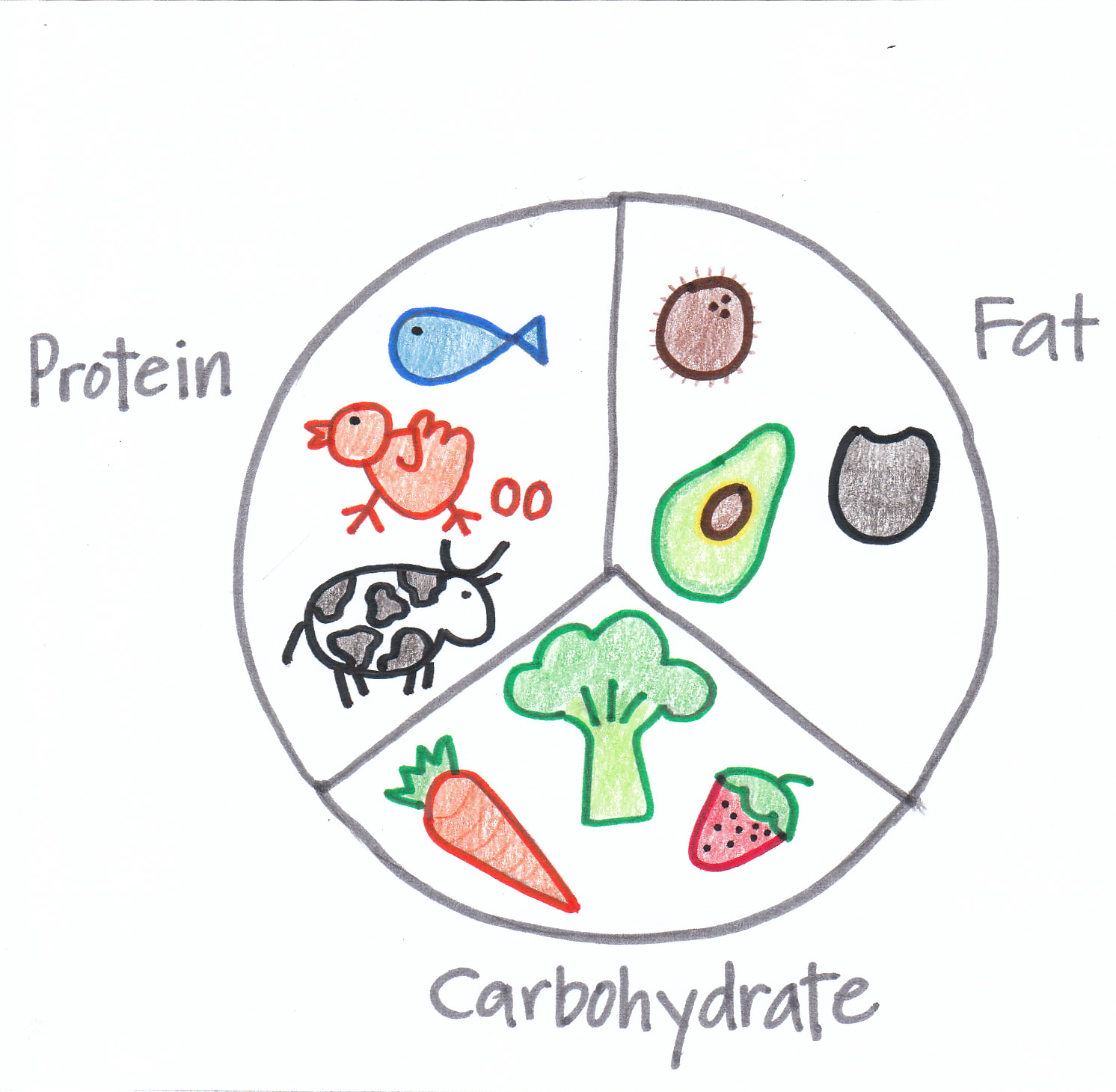
Realizing the carbohydrates, fats, and proteins that you eat as causing your blood sugar (mood) to change is a very powerful tool. It is the next step of awareness once you have regulated the first two steps in this process. Believe it or not, although all food seems organic (meaning it comes from the earth, it is whole, and it is unlike that plastic fruit your grandmother keeps in her kitchen)-- not all food is the same. Yes, they might have similar nutrient profiles, but they can be misleading. Behinds the scenes, a lot is going on. A great example of this is dietary fat. For the longest time, people thought that saturated fat was the devils nutrient. This came about based on a study done by a man named Ancel Keys. The long and short of it is: Ancel went to a bunch of countries to see what overweight populations were eating. He documented these studies, but he didn't do it honestly. What he published was that saturated fat causes obesity in populations around the world. Problem is, this wasn't true everywhere. What was true was that some populations who consumed saturated fat were obese, and some populations that consumed saturated fat were in fact perfectly healthy. Why he was biased toward saturated fat causing disease and obesity is beyond me, but if I had to speculate, my theory is he was told to find it to promote the sales of vegetable oils, making some people very rich. That's just a theory though, I don't really know. But enough with the history lesson. The point is this: not everything we are told in the media in regards to health (or anything really) is true, and we should seek out those independent studies for a better idea as to what is going on. This is true for all the macronutrients. Another big one is carbohydrates. After fat took its turn at being the bullied kid at school, carbohydrates stepped in. With the rise in national disease, unhealthy weight gain, and early death, carbohydrates was the main dietary culprit. But why is this? Well, generally speaking, America eats a ton of food, period. Even when our macronutrients are balanced, we eat more than most countries. So that plays a roll on the whole. The other easy thing to see, if you have ever eaten carbohydrates, is they are really easy to consume, let a lone find. They are in everything, and they don't satiate you very well, cause by the time they get into the stomach, they are basically broken down into nothing. It is similar to how watermelon sized meteors break down in our earth's atmosphere; by the time they get to the surface, they are barely recognizable with a human eye, or even felt or tracked. So image this going on in your body. If you notice, when you eat a lot of carbohydrates, you really don't "feel" it until it is too late, and then you regret it. Trust me, I know. I love both ice cream and potatoes, and I have had many bouts with this phenomena. So why doesn't this happen with protein or fats? Well, in the simplest terms, think about the structure of protein and fat. I'm no chemist, but I know just from touch, and mouth feel that, generally, protein is pretty chewy and dense, and fat is just about the same with a little more fluidity (meaning, at least to me, that it can change forms-- liquid to solid and back again-- relatively easily). If you imagine each of these macronutrients individually, it is easier to understand how they interact in your body. I know this isn't hard science, but that isn't the point. If you apply this linear model, you can see how it is not carbohydrates that is to blame for Americas obesity, but you can say it makes sense why it is being blamed, Carbohydrates are perfectly fine most the time, but they are also the most altered and broken down food in the world. Types of carbohydrates will be covered in a separate post. All you really need to do is tweak your understanding, and you can fix the problem, at least seemingly. So, what is the take away point from this step? Eat your meals and snacks with a balances of all three macronutrients to avoid spikes in blood sugar (mood swings) and you will be on the path to a balanced and a healthier lifestyle.

After reading over this post, I realize I have covered a lot of information so far. In the name of not overwhelming anyone interesting is following this step by step approach, I will write about more techniques to sticking to your health goals in another post. This will also give me more time to condense the information I've learned. In conclusion, I appreciate that you read this article, and hope to find you in better health in the future.
Thursday, January 22, 2015

Tips to Keep in Mind When Starting A New Health Kick

It Must Be A New Year, The Gyms Are Packed

Ah, can you smell it? The gyms are filling up. It must be January. It would be silly for me to say that there are secrets to losing weight. If there were, I probably would have found them by now. That being said, I think I have come up with a few tips for losing weight, keeping it off, and understanding that any one philosophy is only as good as the one you are not doing. That being said, look over some of these thoughts and see how they might be able to help shine some light on your health improving journey.

Don’t Eliminate Your Favorite Foods
I see this all the time with clients. I struggled with it myself. You want to eat better. You want to be healthier. So you stop eating out, you start buying vegetables, and in three weeks you want to kill everyone. This is never going to get you to lose weight, its only going to make you more frustrated.
The Solution: There are just about 21 meals in a week, baring snacks, that most people live by. If you can make half of those better meals, i.e protein, vegetables, fruits, etc, you are going to see a big change without making a big change. When you feel you want to up or lower the amount of “good” food you are eating, do it. The goal is to make progress of any kind. And if you fall off the horse and go to Taco Bell, try again tomorrow. Eating better isn’t about being miserable, it is about staying in your means
All Diets Do The Same Thing, Pick One:
You might think that because the Paleo diet worked for you last time that it will again. And it will. But then your best friend, who tried a vegetarian diet, lost a lot of weight too. Then you find out that someone in your office building only ate peanut butter, cottage cheese, cinnamon, carrots, and cheese wiz for 6 weeks and lost 20 pounds. You rethink all you ever knew about diets, and feel bad. Well guess what, don’t. All diets basically have the same premise, by eliminating some kind of food group, you are eliminating calories. When you eliminate calories, you, because of science, are going to lose weight. It is really that simple. So it doesn’t matter what diet you choose. If you have something to loose, pick a diet, do it until you get bored, and then do another one. It is that simple
Cheat Meals Are Good, Use Them:
A phrase semi coined by the broscience/bodybuilding community has real merit to keeping your sanity while trying to also eat better. Cheat meals, if you don’t know, are essential meals where you eat whatever you want. Foods you don’t usually eat because if you did, you’d live on the toilet. It is Friday night. You and the guys want to get a few beers, have some sliders, and watch some sporting event, maybe even talk to some girls. Cool. But there is always that one guy who is like, “Na, I can’t go out tonight. Beers won’t fit in my macros this week.” Don’t be that guy. Any time you have to sacrifice your social life because of your diet, you are doing it wrong. If you need motivation to feel good about cheat meals, be stricter during the week when you really aren’t doing anything fun anyway.
The Master of Tupperware is the King of Meal Planning:
When you are out at the grocery store and you are amped up about starting your new diet of string cheese and gluten free, semi salty bark crackers, pick yourself up some Tupperware. Get the kinds that are three compartments. Get at least 7 of them. Learn to cook and pack food enough for 3 days. Repeat. Do this enough and you won’t even think about it. The person who can plan meals and use Tupperware will have eliminated the hardest part of any health change, consistency, and you will feel badass as hell for learning to cook.
Don’t Eat The Same Thing for Too Long
If you are crazy like me and don’t mind eating cold, day old Brussel sprouts throughout the week, skip this tip. If you aren’t a nut job, keep reading. Variety is the spice to life, and to your food. Switch up your meals every now and again to keep your interest in your health goals exciting. Nothing can be worse than waking up after four weeks of oatmeal and black coffee and wondering why you are even alive. Whatever it is you want to change, change it. You are better off “cheating” a little bit on your own “restrictions” than quitting your program all together all because you couldn’t put a little sugar in your coffee. Remember, in this case, big goals are more important than small setbacks.
Health Changes are Marathons, Not Sprints
Not going to lie, this is probably the most boring tip I will write in this piece. Why? Because just about everyone has heard this one.  This is more for beginners who have never tried to lose weight, get in shape, or just want to feel better from an energy stand point. If you fall short of your goals, don’t think of it as much as a setback as a chance to change and start over. Even having that level of self-awareness, where you recognize you are falling behind, is a great amount of progress. When it gets tough, remember that your health is a long term goal, and that every day is a change to start over if you fall behind on your main goal.

Monday, January 5, 2015

Tender Sweet and Spicy Chicken

This is my new favorite chicken dish. That mostly stems from not having to do much prep work. Nothing too attention hoarding. But I am crazy and add like 7 steps to this that you could naturally skip. Here is the recipe all spelled out.

2 whole chicken breasts
1 carton of chicken or beef broth (mixing your animals is delicious).
1/2 cup of honey
and a sprinkle of red chili flakes, salt, curry, and some garlic

    First step is pretty simple. It is the actually more simple than I usually prescribe for my recipes. You take your two whole chicken breasts, and put them in a big two handle pot. Fill the pot with water, at least 1 inch over the top of your chicken, and place it on the stove on high. Let the boil for awhile. When I say awhile, I mean enough time to go do something else without worrying about burning your food. Once some time has gone by, drain the chicken and place the cooked chicken back in the pot (or you can cut it up on a cutting board however you like). Once in the pot, I shred the chicken up. This method is more laborious than just cutting it up, so if you want to cut it up, be my guest. Soon I wont want to shred it up anymore, and you'll be the smarter one.
    Next you put in about 1 cup of chicken broth to help cook it in some flavor. We boiled it with water because we needed a lot of liquid and its cheaper than using broth. Now you can use the money you saved on drugs or whatever else you'd like to do for fun. Now this is where you add the spices. After we stir in the spices we  are going to let that simmer for about 10 minutes.
    So you've checked your clash of clans village, played a few rounds of soccer stars, lets go see how the chicken is doing. At this point everything smells amazing, and you would have been hard pressed to have messed up. Reduce heat to low. Now comes that 1/2 cup of honey you've been dipping your finger in for the last 30 minutes. If there is any of that left, put it in the pot and stir it up. You will want to let that cook in for about 5 minutes. Then go back, cover the lid, and turn off the heat. We want to just let that sit in there until before bed, or the next morning if you are gross like me.
    The other great way you can make it spicy is add some sriracha. I didn't do it this time because I ran out and Sprouts doesn't carry it. I'm not sure I want to go there anymore. Who doesn't carry sriracha at this point?